
Getting your website found is no longer just about ranking on Google. As more people use tools like ChatGPT, Gemini and Perplexity to find information, appearing in AI-generated responses is just as important as ranking in traditional search results.
This guide explains how to optimise your website so it gets indexed by search engines, referenced by AI and found by your audience.
Meta titles and descriptions
What it is: A meta title is the clickable blue link displayed on search results pages. The meta description is the short summary underneath that describes the content.
Why it matters: Clear meta data is your first opportunity to earn a click. Unoptimised titles and descriptions break the pattern search engines rely on to understand your page. Well-written meta data acts as a bridge between what someone searches for and the answer you provide.
Best practices
- Keep meta titles under 65 characters to prevent them from being cut off in search results pages
- Keep meta descriptions between 60 and 160 characters.
- Write unique titles and descriptions for every page.
- Include your primary keywords, your location (if this is an important USP) and a clear benefit into the description of the page.
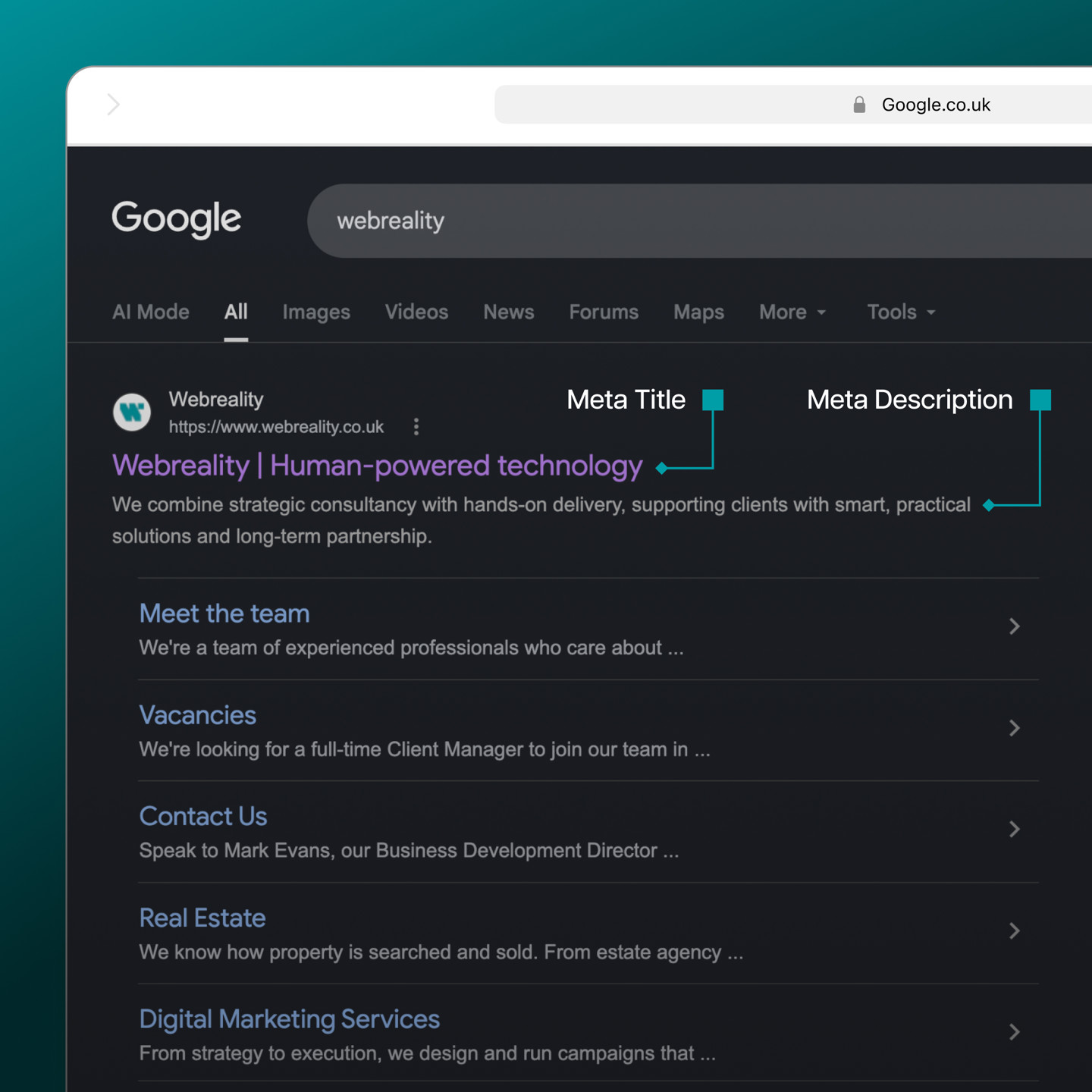
Why this works:
This layout keeps character counts within standard search engine display limits. It focuses on the target keyword of the page ‘digital marketing’, and hooks the reader with a clear business outcome ‘drive results’ and includes a call-to-action, rather than generic context.
Page headings (H1s and subheadings)
What it is: The H1 is the primary heading on a page. H2s, H3s and H4s are subheadings used to segment content into logical sections.
Why it matters: When your page structure is confusing or missing a primary heading, search tools question the page’s relevance and move on. Clear headings guide visitors who quickly skim your page content, hunting for the information they need. They also give AI search engines a clear map to reference in their answers.
Best practices
- Use one primary heading per page that clearly states the primary topic or purpose of the page
- Break up long text blocks using H2 and H3 tags to improve readability.
- Include relevant keywords in your headings to describe exactly what the following section covers.
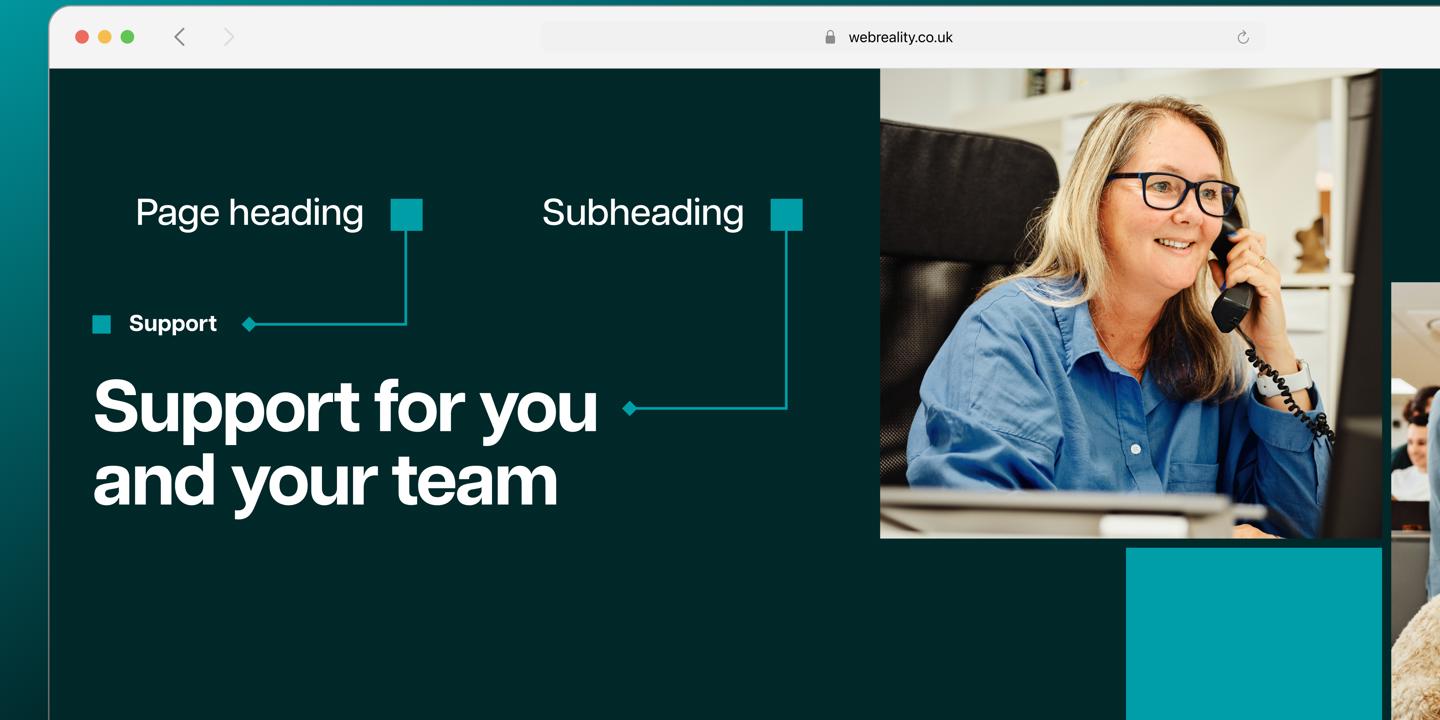
Why this works:
The structure of our ‘Why work with us’ page uses a single, clear H1 heading to tell search crawlers the exact purpose of the page. The subheadings then segment the copy logically. This allows users to scan the benefits quickly and helps AI search engines index the page context instantly.
Link optimisation and anchor text
What it is: If a link (internal or external) is broken or links to an unoptimised page it can negatively impact the search visibility of your pages as search results struggle to map the content on the site. Anchor text refers to the specific, clickable words in a link.
Why it matters: Every link on your website should guide the user or search engine to the next logical step. Vague link text slows down optimisation and weakens your authority. Descriptive links help answer engines map your digital footprint and understand how your content connects.
Best practices
- Avoid using vague phrases like "click here" or "find out more".
- Use text that describes the destination page exactly (for example, "Find out how we can support you").
- Check regularly for broken links and fix them.
- Ensure external links point to credible sources.
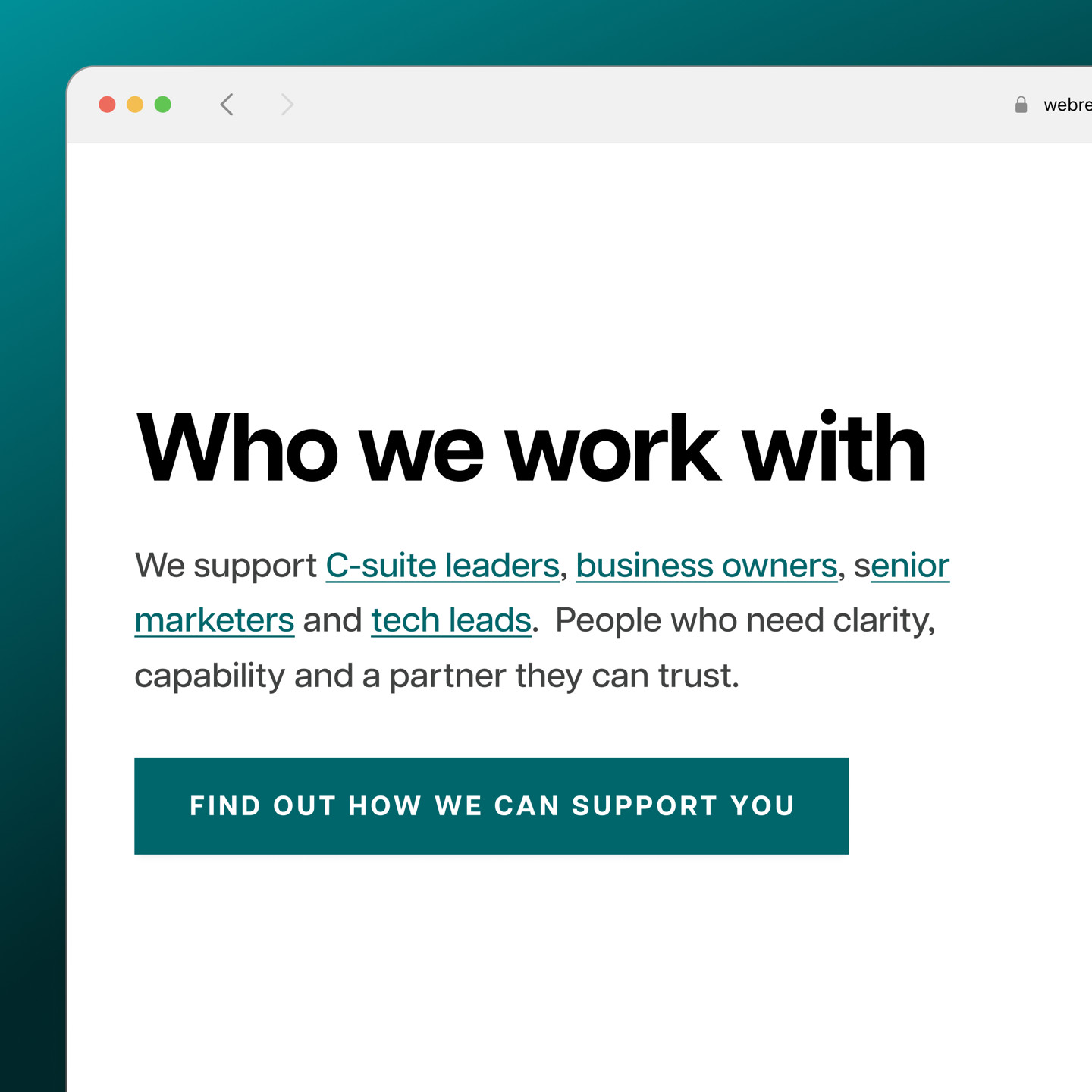
Why this works:
Instead of using dead-end phrases like "click here", the descriptive link text tells the user and search crawlers exactly what to expect next. This context establishes internal topical authority and links relevant pages together.
Image ALT text
What it is: An ALT text is a description assigned to an image in your website's code.
Why it matters: Search engines cannot see images. Unlabelled imagery acts as an invisible barrier to discovery. Clear ALT text ensures your visuals support your search performance and make your site accessible.
Best practices
- Apply descriptive ALT text to every image.
- Include target keywords naturally where they fit.
- Name the file clearly before uploading. A search engine understands "Webreality-team-collaboratoring-and-discussing-digital-strategy.jpg" much better than "IMG001.jpg".

Why this works:
The ALT text uses plain English to explain exactly what is happening in the photo. Instead of a vague phrase like "two people at computers", it specifies who is in the picture, and what they are doing. This helps individuals using screen readers understand the image perfectly, while naturally allowing search engines to index the context and keywords of the page.
URL optimisation
What it is: The URL structure is the exact web address of your page.
Why it matters: A clean URL structure prevents duplicate content issues that dilute your ranking power. Logical and predictable paths help visitors navigate your site and signal a clear internal structure to search engines.
Best practices
- Use lowercase letters and dashes instead of spaces or underscores.
- Follow the page name structure as seen on the website
- Set up a 301 redirect if a page can be accessed via an alternative URL to point back to the original version.
The following page sits within the what we do and services section https://www.webreality.co.uk/what-we-do/services/strategy/ so the URL format follows this structure.
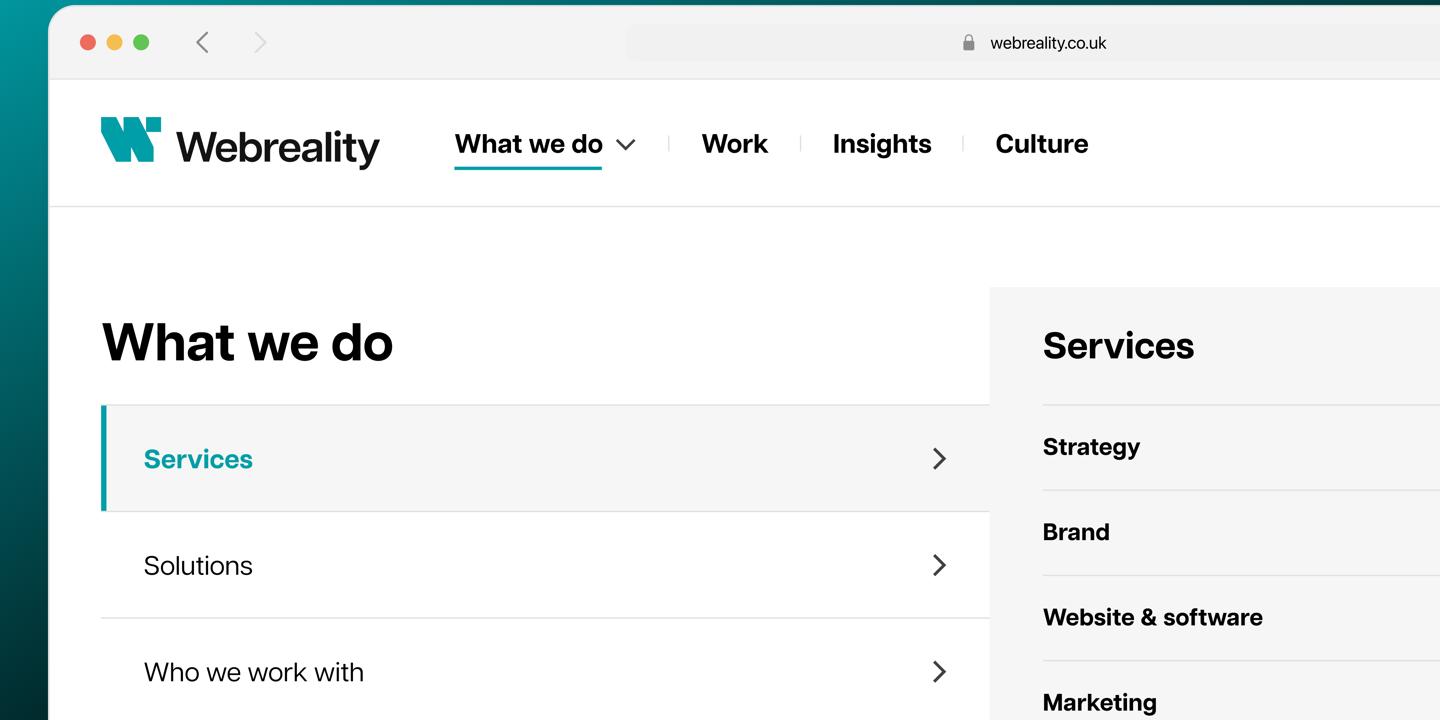
If however the URL was just https://www.webreality.co.uk/strategy/, it omits what the parent pages are which means search engines can struggle to categorise and follow the paths around the site.
Why this works:
This folder path directly mirrors the site's structural architecture, making the user journey predictable and logical. Clean, lowercase formatting separated by dashes prevents crawl confusion and eliminates duplicate indexing risks.
Canonical tags
What it is: A canonical tag tells search engines which version of a page to prioritise when there are duplicate or similar pages on your site.
Why it matters: Inconsistency across URL variations splits your search visibility. A definitive canonical tag gives search algorithms a single reference point. This ensures your primary pages retain their ranking value over time.
Best practices
- Link the canonical tag back to its own URL on unique pages with no duplicates.
- Run a site audit to ensure every page has a correctly implemented canonical tag.
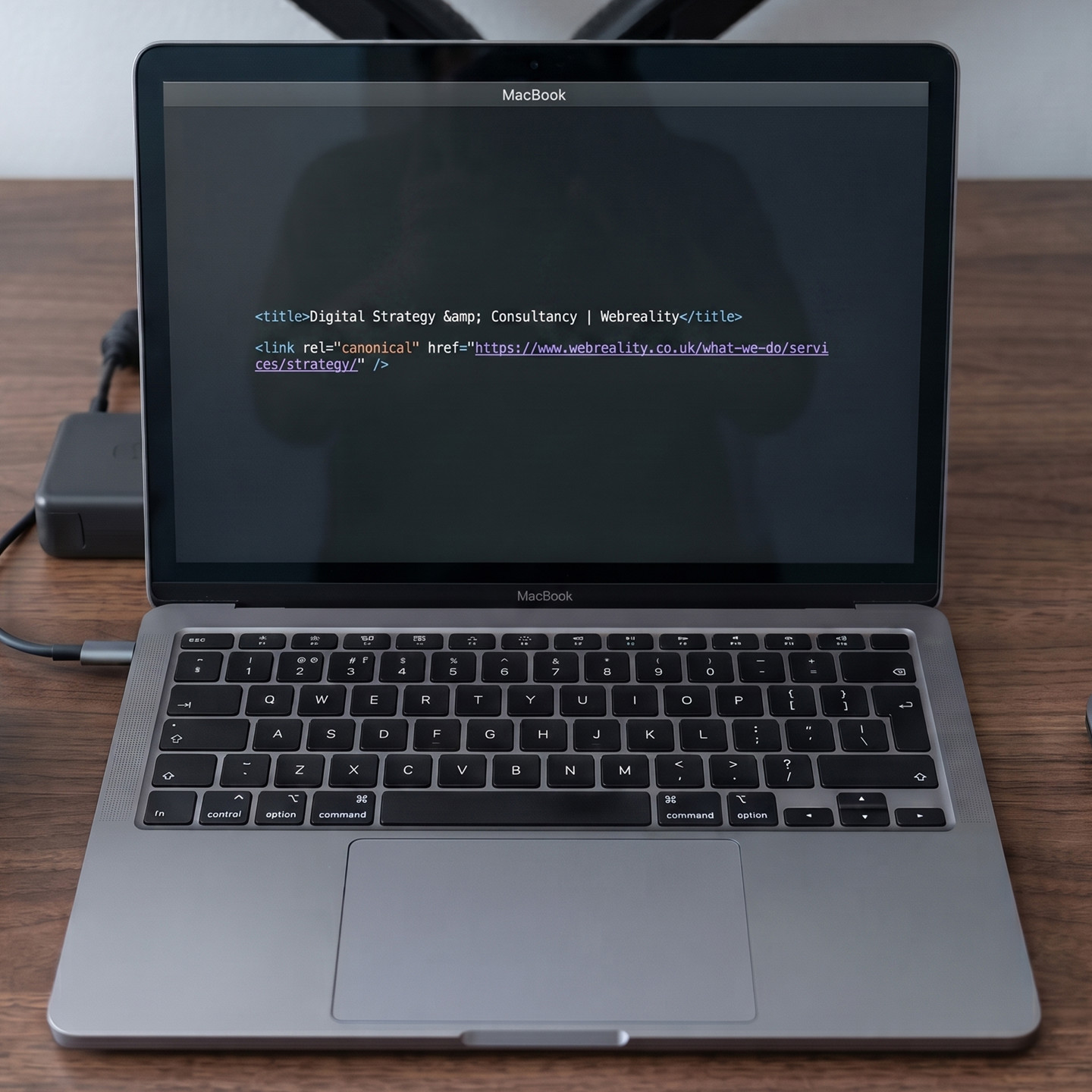
Why this works:
This code tells search engines exactly which primary page to prioritise if there are multiple URL variations. It prioritises all ranking authority onto a single page instead of diluting your visibility across multiple variations.
PDFs
What it is: PDFs are standalone files uploaded to websites for collateral like brochures, forms or menus.
Why it matters: Standard web pages convert faster and create less friction than isolated document downloads. When you must use a PDF, optimising its properties ensures the content remains visible to search engines and AI crawlers.
Best practices
- Build information directly onto a web page rather than relying on a PDF wherever possible.
- Use dashes instead of spaces in PDF file names to mimic standard URLs.
- Give the file a keyword-focused name rather than a generic one.
- Open the PDF settings and set a dedicated meta title and meta description.
- Format your main text title inside the document as an H1 style.
Business and places listings
What it is: These are your official profiles on platforms like Google Business and Bing Places.
Why it matters: Your directory profiles are often the first thing people see when searching for your brand. Conflicting details or missing locations break the trust your audience looks for. Accurate local listings reinforce your physical presence and drive genuine enquiries.
Best practices
- Keep your name, address and phone number completely consistent across all platforms.
- Create a unique listing for every physical branch your business operates.
- Upload relevant images of your location to increase engagement.
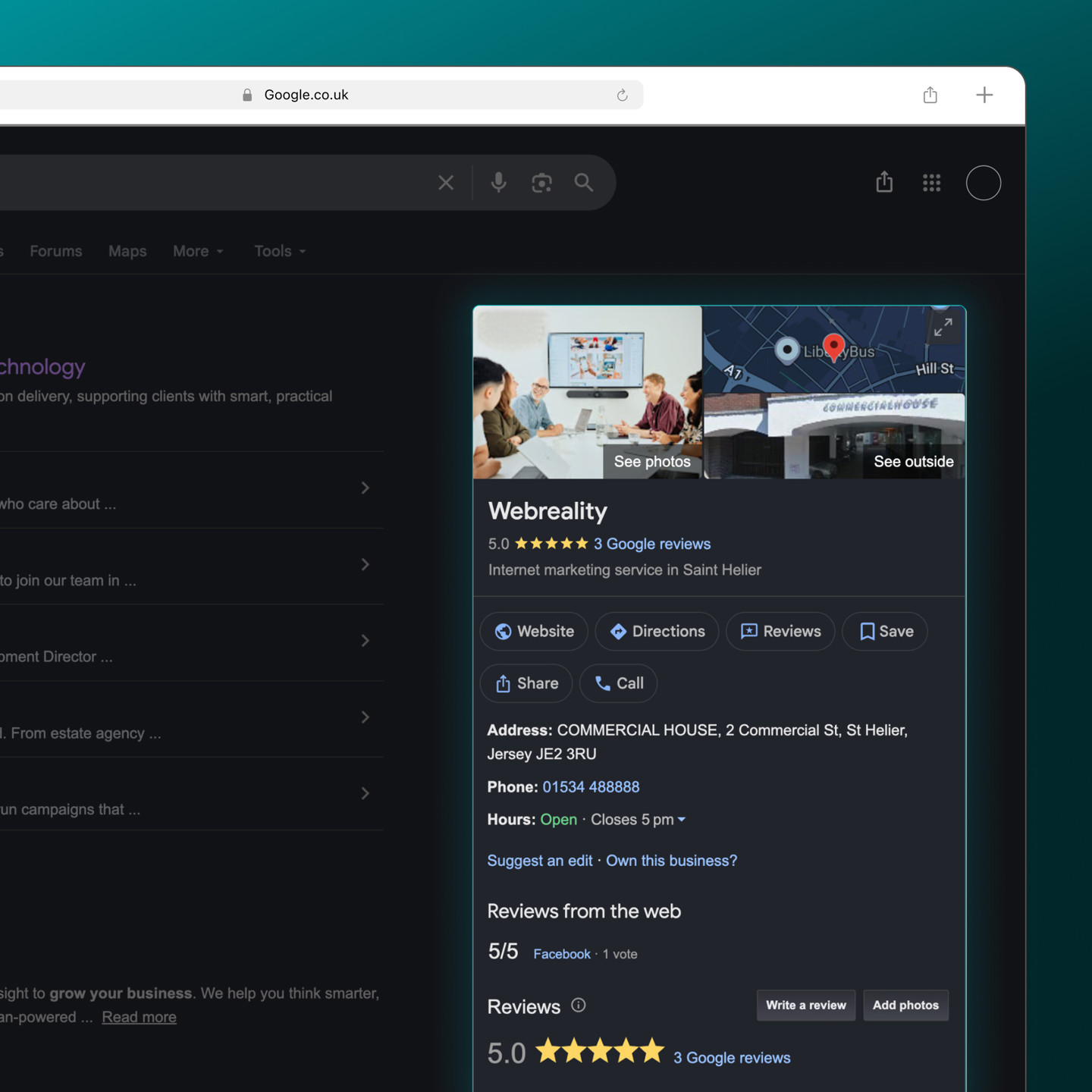
Why this works:
This profile features name, address, and phone details that match our website precisely. Consistent location markers, accurate opening hours, and active customer reviews signal verified credibility.
Next steps
Optimising your website is an ongoing process. Implementing these best practices gives you a strong foundation for visibility across traditional search engines and AI tools.
Knowing what needs fixing is only the first step. The next is getting the work done. If you need support executing these changes or want to ensure your technical foundations are built correctly, our team can help. We handle the hands-on implementation of SEO and AI optimisation, turning technical recommendations into live updates.
Call us on 01534 488 888 to discuss how we can support your ongoing website performance.