
Will Evans
Senior Marketing Executive

Will Evans
Senior Marketing Executive
21st May, 2026
Read time: 4 minutes
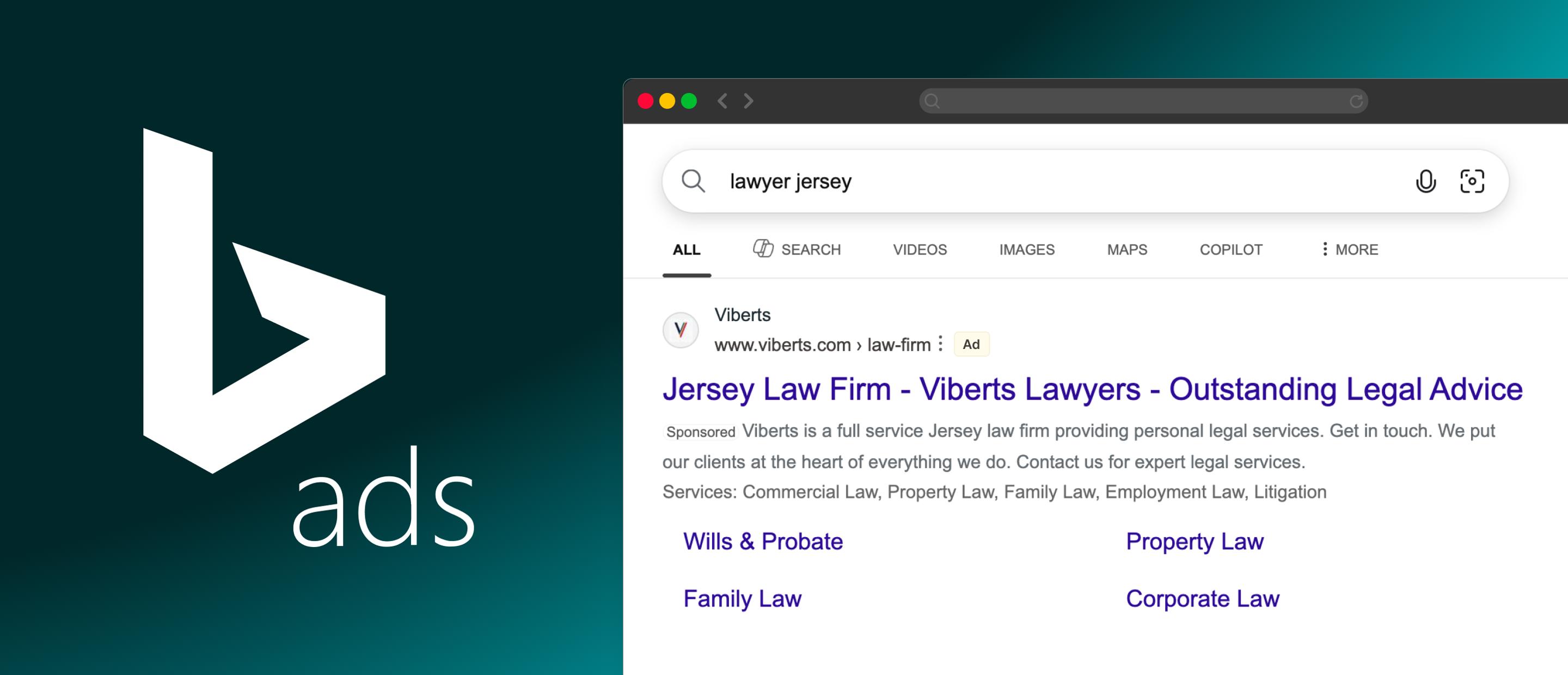
Most paid search strategies begin and end with Google. It dominates market share and is often the first platform marketers learn.
But focusing only on Google means ignoring a valuable slice of search demand.
Microsoft Advertising, which powers Bing Ads, reaches millions of users across Bing, Yahoo, AOL and partner networks. Many of these users behave differently to typical Google audiences, which is exactly why they're worth paying attention to.
Retaining our Microsoft Advertising Partner badge reinforces what we see across campaigns every day. Brands that include Bing in their paid search strategy capture additional demand that competitors often miss.
Before exploring why this matters, it’s worth addressing a few common misconceptions.
While Google dominates overall search share, Bing remains a significant player, particularly on desktop devices. It’s the default search engine on Microsoft Edge and integrated into Windows search.
That gives Microsoft Advertising access to millions of users who may never switch their search engine.
The platforms share similarities, which makes campaign management straightforward. But Microsoft Advertising offers its own targeting options, audience signals and user behaviours.
Treating it as a simple copy of Google campaigns often means missing opportunities.
Volume is smaller than Google. But the traffic is often highly qualified and less competitive, which can drive strong performance in the right sectors.
Once these myths are out of the way, the real question becomes clear.
Who uses Bing?
One of the more interesting things about Microsoft Advertising is its audience.
Compared to Google, Bing users tend to skew slightly older and more established professionally. Many are using desktop devices at work or at home, often through Microsoft Edge or built-in Windows search.
Typical characteristics of Bing users include:
For advertisers, this creates a slightly different search environment.
Bing audiences include professionals researching services, business buyers comparing providers and consumers making considered purchases rather than quick mobile searches.
This audience profile is one reason why Microsoft Advertising performs particularly well in sectors where trust, research and higher value decisions are involved.
Beyond audience differences, there are several practical advantages to including Bing Ads in a paid search strategy.
Many advertisers put their budgets exclusively into Google. That leaves fewer advertisers competing for the same keywords on Bing.
Reduced competition often leads to lower CPCs, stretching budgets further.
Because many searches happen on desktop devices, users are often in research mode. They may be comparing providers, requesting quotes or preparing to make a purchase.
For businesses already running Google Ads, expanding to Microsoft Advertising is relatively simple. Campaign structures, keywords and targeting approaches translate well across both platforms.
Bing can support most search campaigns, but certain sectors see consistently strong results.
These typically include:
Running paid search on a single platform is one of the most common ways to underperform.
In reality, each search engine reaches slightly different audiences.
Running Bing Ads alongside Google Ads lets brands:
In other words, it’s not about choosing between Google and Bing. It’s about ensuring your brand appears wherever potential customers are searching.
If your business is already investing in paid search, expanding beyond Google should be a natural next step.
Microsoft Advertising offers access to a valuable audience, often with lower competition and strong commercial intent.
The brands seeing the strongest search performance are rarely the ones relying on a single platform. They’re the ones who've thought carefully about where their customers actually are, and made sure they're showing up there.
If you'd like to look at how Bing could sit alongside your current paid search activity, speak to our team about a strategy for Bing Ads.
Will Evans
Senior Marketing Executive
Need help with Bing Ads?
Speak to Will Evans, Senior Marketing Executive, about how Bing could start delivering for you.
No Content Set
Exception:
Website.Models.ViewModels.Blocks.SiteBlocks.CookiePolicySiteBlockVm